Why your business needs lean manufacturing?
Because lean manufacturing reduces waste and increases the efficiency of your company's production line, it has an impact on other parts of the business. Converting to the new system requires adjustments within your company and changes in your supply chain. Before implementing a lean manufacturing program, you have to plan for these effects to get the full benefit of the lean manufacturing initiative.
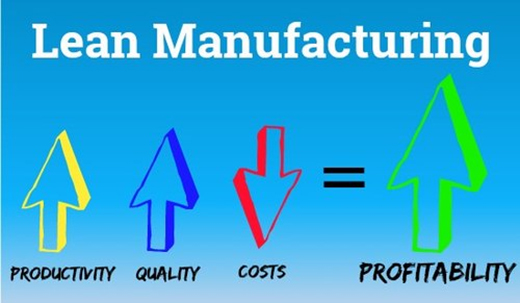
To recap, the goals of lean manufacturing are to improve the quality of products, eliminate unnecessary waste, reduce production times and reduce total costs. Hopefully, this will give you a better understanding of lean manufacturing and why it’s such a popular and widely used philosophy in today’s marketplace.

We are the best choice for your alternative to get advice and coaching once we are fully determining to accept that lean culture manufacturing mindset. The result is the end up of business bill.

What is Six Sigma and why is it important?
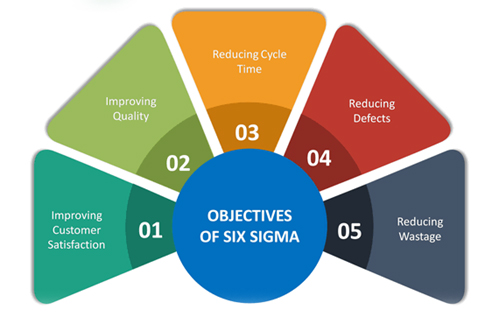
Six Sigma is a methodology that helps improve business processes by using statistical analysis. It is a data-driven and highly disciplined methodology and approach that ensures the elimination of defects in any type of business or organizational process.
In order to achieve Six Sigma, organizational processes need to keep their defects to a maximum of 3.4 per million (99.99966%) opportunities. A Six Sigma defect can be defined as anything that is outside of client specifications. Its objective is to minimize the variability in business and manufacturing processes. One of the salient highlights is the ability to create focus on achieving quantifiable and measurable financial returns from any six-sigma project.
Developed by Motorola in 1986, Six Sigma is basically a set of tools and techniques that enable process improvement.
Importance of Six Sigma
Six Sigma has come a long way since its implementation as a business strategy by Jack Welch at General Electric in 1995. Since then, it has been widely implemented in several industrial sectors. Implementing Six Sigma is important as it will help organizations in several ways like:
Mapping or flowcharting of processes
Process mapping is utilized by Six Sigma, which can be defined as a process of flowcharting to enable documentation of a specific business process. Documentation includes various aspects of business processes like employee roles and decision points in overall work performance required for meeting specific client needs. These flowcharts are often used towards making improvement suggestions.
Elimination of variation and waste
After the identification of improvement ideas, Six Sigma techniques can be used for the elimination of waste and variation in business processes. Waste is defined as anything that doesn’t help in producing the service or product that is required to be delivered to a customer.
Reduced Defects
One of the reasons why implementation of Six Sigma is important is that it helps in reducing defects. Using Six Sigma techniques, employees are able to identify problem areas as well as recurring issues that affect the overall quality expectation of a service or product from a customer’s viewpoint.
Room for continuous improvement
Last but not the least, employees trained in Six Sigma processes have the necessary tools and skills to identify problem or bottleneck areas that camp down production or performance. This process helps employees to identify areas of improvement and work towards it continuously. In the end, it helps in improving existing services or products and assists with the development of new high-quality products.
clients in
work with
complete
Benefits
Research helps you plan the best way to get your product from the manufacturer to the retail shelf. In addition to deciding which retailers should carry your product, you should determine where your inventory will be held.
Go to your team, and tell them you want to make a fresh start. Tell them you want them to enjoy their jobs more and get more done.
In this problem solving step, you will want to figure out what caused the problem, what the problem looks like at this moment, and the urgency of addressing the problem.